Auto Body Collision Repair Guide to Save Money and Choose the Best Shop
This auto body collision repair guide explains everything you need to know about repair costs, the repair process, and how to choose the right shop. Whether your car has minor damage or needs major fixes, understanding auto body collision repair helps you make smart decisions. Learn how repairs work, what affects pricing, and how to ensure your vehicle is restored safely and professionally for long-term performance and value.
What Is Auto Collision Repair and Why It Matters
Auto collision repair is the process of fixing a vehicle after it has been damaged in an accident, from minor dents to major structural issues. It restores your car’s appearance, performance, and safety. Timely auto collision repair prevents further damage, ensures proper alignment and braking, and protects your vehicle’s resale value. Professional repairs give peace of mind, keeping your car safe and reliable on the road.
Definition of Auto Collision Repair
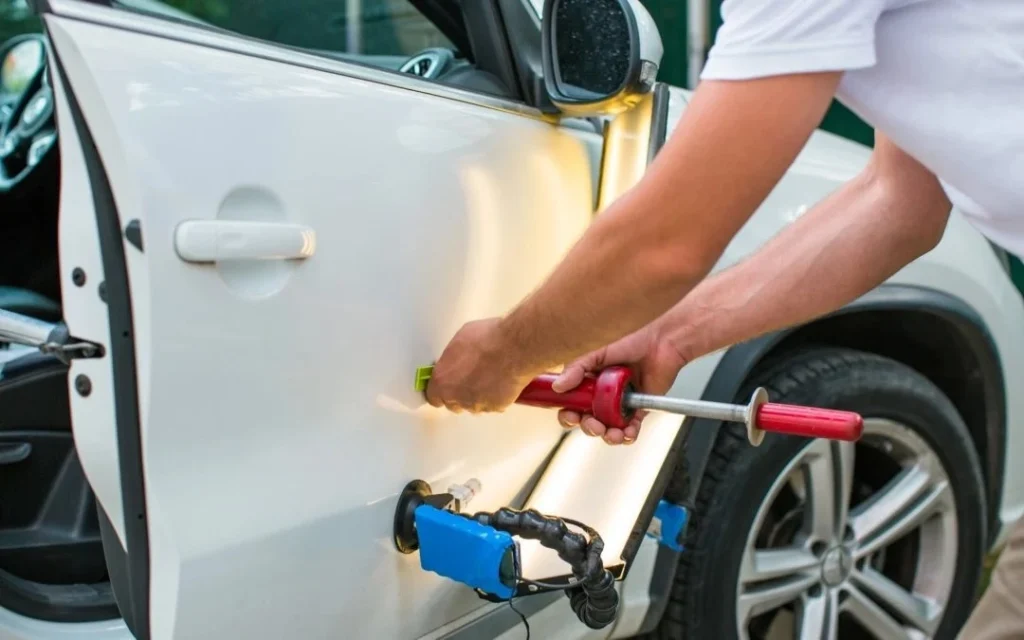
Auto collision repair involves restoring a vehicle after an accident. It includes fixing dents, scratches, damaged parts, and repainting, ensuring the car looks and functions properly while addressing both minor and major damages effectively.
Importance of Auto Collision Repair for Safety and Vehicle Value
Timely auto collision repair is crucial for safety and maintaining your car’s value. Proper repairs prevent hidden damage, ensure critical systems like brakes and alignment work correctly, and protect resale value, keeping your vehicle reliable and secure.
Common Types of Auto Collision Repair Services
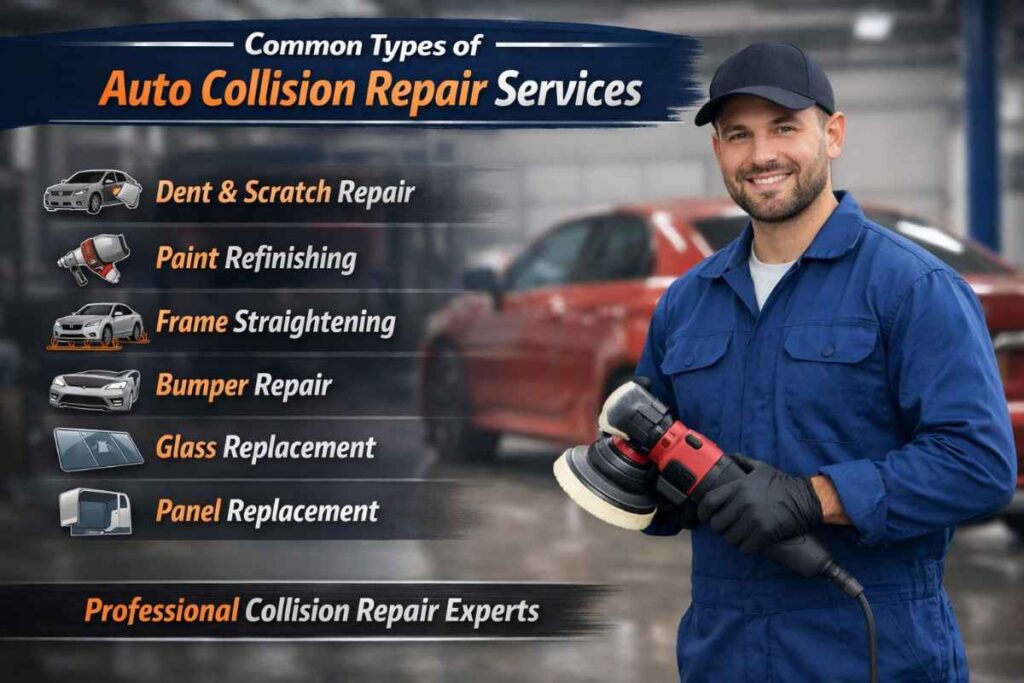
Common types of auto collision repair services cover everything from minor cosmetic fixes to major structural work. This includes dent and scratch removal, repainting, bumper repair, frame straightening, alignment, and suspension repairs. Understanding these services helps vehicle owners choose the right repair shop and ensure their car is fully restored. Professional auto collision repair ensures safety, functionality, and a like-new appearance after an accident.
Exterior Auto Collision Repair Services
Exterior repairs focus on visible damage, such as dents, scratches, paint chips, and broken bumpers. These services restore your car’s appearance and protect it from rust or further damage while keeping it looking as good as new.
Structural and Mechanical Auto Collision Repairs
Structural and mechanical repairs address hidden damage like frame bending, suspension issues, or alignment problems. Professional auto collision repair ensures your vehicle’s safety, drivability, and long-term performance after an accident.
Step-by-Step Auto Collision Repair Process
The auto collision repair process follows a structured approach to restore your vehicle safely and efficiently. From initial inspection to final delivery, professional repair shops handle every step with care. Understanding this process helps vehicle owners know what to expect, ensure high-quality repairs, and avoid hidden issues. Proper auto collision repair improves safety, functionality, and appearance after an accident.
Vehicle Inspection and Damage Assessment
- Technicians examine your car for visible and hidden damage.
- They document dents, scratches, frame issues, and mechanical problems.
- Accurate assessment ensures no issues are overlooked during repair.
Repair and Restoration Process
- Dent removal, part replacement, and bodywork are performed.
- Paintwork and finishing touches restore the car’s original appearance.
- Advanced tools and techniques ensure precise auto collision repair.
Factors That Affect Auto Collision Repair Costs
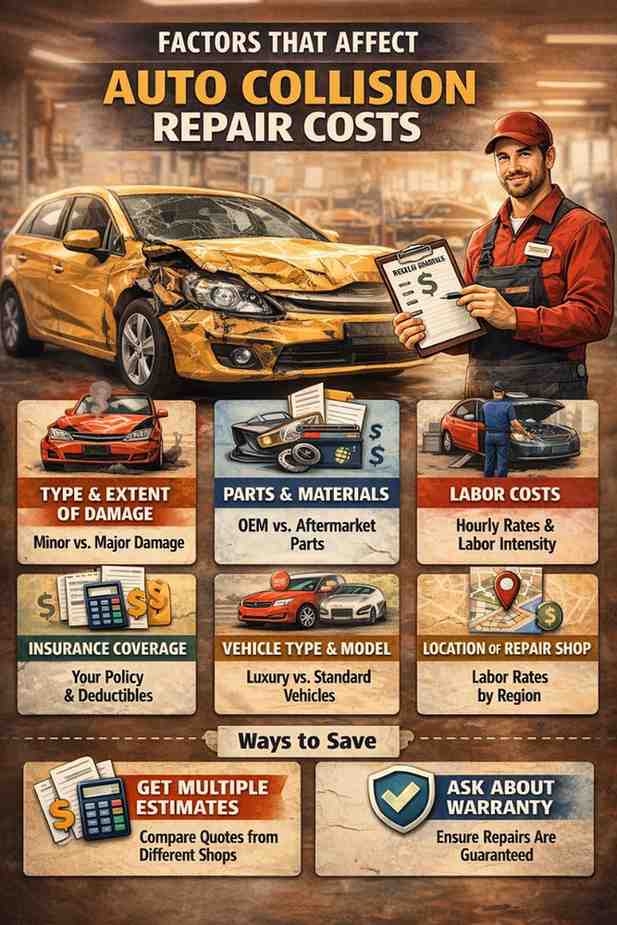
The cost of auto collision repair can vary widely depending on several factors. Understanding what influences pricing helps car owners plan their budget and avoid surprises. Factors include the extent of damage, type of vehicle, parts required, labor, and whether insurance is involved. Professional repair shops consider all these elements to provide accurate estimates while ensuring high-quality repairs that restore your car’s safety and appearance.
Severity and Type of Damage
- Minor dents and scratches cost less than structural damage.
- Frame or suspension damage requires specialized repair, increasing cost.
- The complexity of repairs directly impacts the overall price.
Parts, Labor, and Materials
- Original manufacturer parts are more expensive than aftermarket options.
- Skilled labor and advanced tools affect the repair cost.
- Paint type, coatings, and finishing materials add to the total.
How to Choose the Best Auto Collision Repair Shop
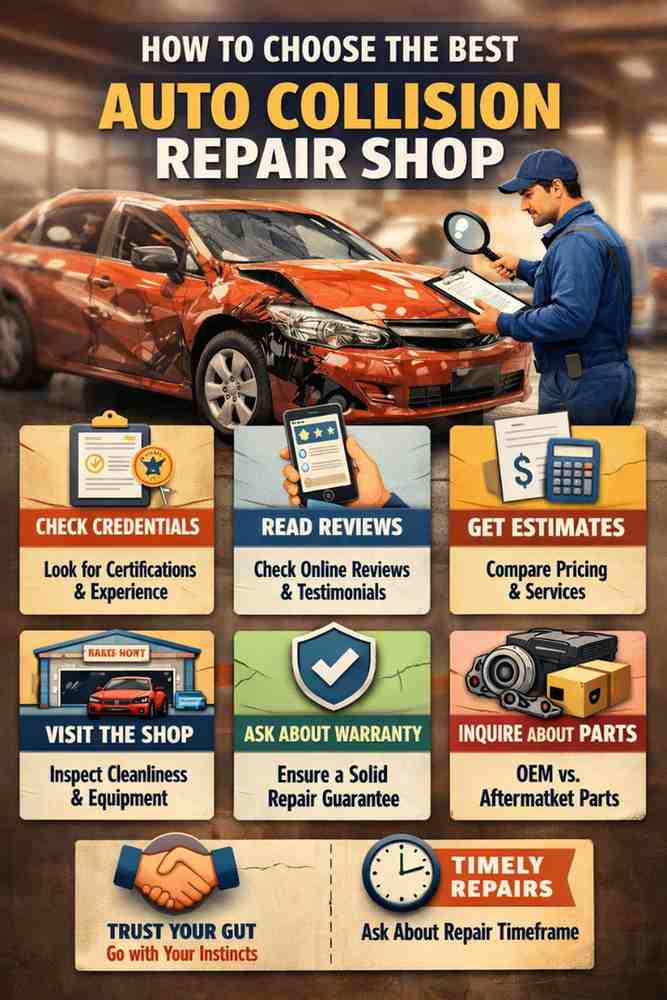
Choosing the right shop for auto collision repair is crucial for quality, safety, and long-term vehicle performance. Start by checking for certifications and experience—shops with ASE-certified technicians or I-CAR training provide reliable repairs. Look for positive customer reviews and before-and-after photos to gauge the quality of their work. Additionally, ensure they offer warranties on repairs, use genuine or high-quality parts, and communicate clearly about costs and timelines. A professional shop ensures your car is restored safely, efficiently, and to its original condition.
Check Certifications and Experience
A reliable auto collision repair shop should have certified technicians and years of experience. Certifications like ASE or I-CAR indicate they follow industry standards and know how to handle both minor and major repairs properly.
Look for Reviews and Reputation
Customer feedback and online reviews reveal the quality of a shop’s work. Positive ratings, testimonials, and before-and-after repair photos help you trust that the shop delivers safe, high-quality repairs.
Ensure Clear Communication and Warrantie
The best shops provide transparent estimates, explain the repair process, and offer warranties. Clear communication ensures you know costs, timelines, and what to expect from professional auto collision repair.
Signs You Need Immediate Auto Collision Repair
Knowing when to get auto collision repair is essential for safety and preventing further damage. Ignoring issues can lead to costly repairs or dangerous driving conditions. Early detection ensures your vehicle stays reliable, protects your passengers, and maintains its value.
Visible Dents, Scratches, or Broken Parts
Even minor dents, scratches, or cracked bumpers can worsen over time. Prompt auto collision repair restores your car’s appearance and prevents rust or further damage.
Unusual Noises or Handling Issues
If your car pulls to one side, makes strange noises, or has uneven braking, it may indicate hidden damage from a collision. Professional auto collision repair addresses these problems before they escalate.
Warning Lights or Sensor Malfunctions
Modern cars rely on sensors for safety features. Dashboard warnings or malfunctioning sensors after an accident signal that auto collision repair is needed to ensure proper functioning.
How Long Does Auto Collision Repair Take?
The duration of auto collision repair depends on the type and severity of damage. Minor cosmetic fixes may take a few hours to a couple of days, while major structural repairs can take weeks. Understanding repair timelines helps you plan transportation, insurance claims, and reduces stress during the process. Professional shops provide accurate estimates to ensure your vehicle is restored efficiently and safely.
Minor Repairs Timeline
Small dents, scratches, or bumper fixes usually take a few hours to 2–3 days. Quick repairs help restore appearance without significant downtime.
Major Repairs Timeline
Frame damage, suspension issues, or extensive bodywork can take 1–3 weeks or more. Complex repairs require careful assessment, parts ordering, and precise work for safe results.
Factors Affecting Repair Duration
Repair time can vary due to parts availability, shop workload, insurance processing, and the extent of damage. Communicating with your repair shop ensures realistic expectations.
Conclusion
Auto collision repair is essential for restoring your vehicle’s safety, performance, and appearance after an accident. Timely and professional repairs prevent hidden damage, ensure critical systems work correctly, and maintain your car’s value. By understanding the repair process, types of services, costs, and how to choose the best shop, you can make informed decisions and protect your investment. Always prioritize certified technicians and quality repairs to keep your vehicle reliable and safe on the road.
FAQS